
A lower cost base in sludge dewatering: Reducing capital spend and operational burden
A municipal wastewater treatment plant in the United States faced a common but technically demanding challenge: processing 54,000 lbs/day of aerobic waste activated sludge (WAS) with a feed solids concentration of only 0.8%. At such low solids concentrations, wastewater facilities must handle significantly larger sludge volumes to process the same dry solids load. This increases the burden on upstream thickening processes, requires larger equipment and infrastructure, and can significantly increase both capital and operating costs.
DATE 2026-07-27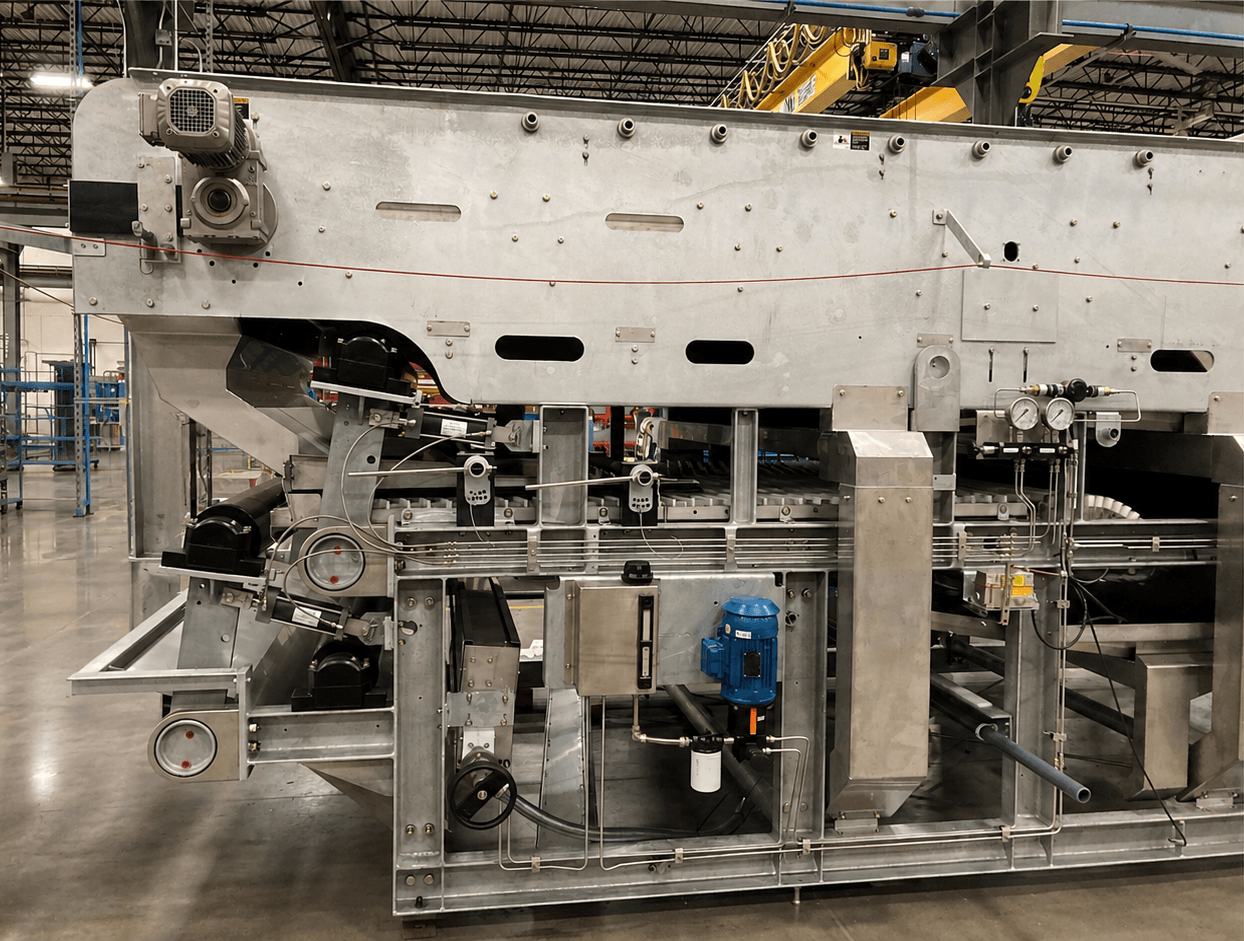
Conventional sludge dewatering systems typically rely on gravity thickening to increase solids concentration before mechanical dewatering. While effective, this additional process step increases capital cost, expands the facility footprint, and adds operational complexity and maintenance requirements.
For this U.S. utility, the original design included a 75-foot-diameter gravity thickener to increase sludge solids from 0.8% to approximately 2.0%, followed by four 2.0-meter belt filter presses. Operating at approximately 300 lb/hr per meter of belt width, the system was capable of meeting the required production capacity. However, achieving that performance depended on a large upstream thickening asset, resulting in significant capital investment, a substantial installation footprint and multiple pieces of equipment to operate and maintain.
The top filter belt press upgrade
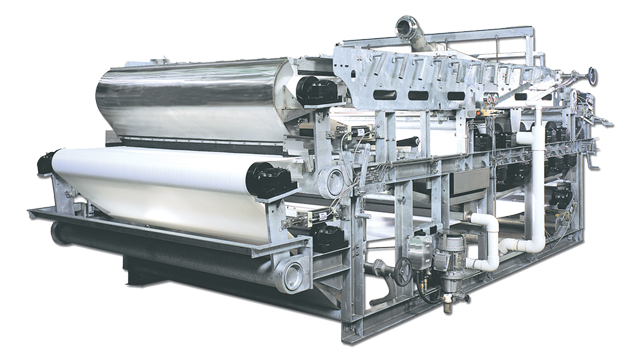
Alfa Laval offered a belt press system that incorporates an integrated, independent gravity deck, enabling it to process 0.8% WAS directly without the need for a separate gravity thickener. By eliminating this upstream process step, the treatment train was significantly simplified, reducing both equipment requirements and overall operational complexity.
This capability allowed the original four-belt-press configuration to be replaced with just three ASH belt presses while increasing throughput from approximately 300 to 450 lb/hr per meter of belt width. For this application, each 2.5-meter-wide 3-belt belt press processed a sludge flow of approximately 278 gpm containing 1,124 lb/h of dry solids, while consistently producing cake solids of up to 19.5% with a solid's recovery above 95%. Despite processing low solids feed directly, the system maintained excellent dewatering performance without requiring upstream gravity thickening.
Why do higher cake solids matter in sludge dewatering?
Increasing cake solids content has implications beyond dewatering performance alone. Each additional percentage point of dryness reduces the mass and volume of material requiring transportation, handling and disposal. In this application, the belt press reduced the incoming sludge flow of 278 gpm to a cake flow of only 12.1 gpm, while recovering more than 95% of the incoming solids. Because water represents a significant portion of biosolids' hauling costs, improved dewatering directly lowers transportation expenses and disposal fees.
Higher solids concentrations can also improve the efficiency of downstream thermal drying processes by reducing the amount of water that must be evaporated. This translates into lower energy consumption and reduced operating costs across the entire sludge management chain.
The optimized gravity drainage and pressure dewatering stages also enabled efficient sludge conditioning with an active polymer dosage of only 18–22 lb/ton of dry solids. Since polymer is one of the largest recurring operating costs in sludge dewatering, maintaining high solids recovery and cake dryness at this dosage contributes directly to lower annual operating expenditure while also reducing the environmental footprint associated with chemical production, transport and handling.
Operational benefits beyond capacity
The process simplification generated additional operational advantages:
- Elimination of the gravity thickener reduced equipment count, maintenance requirements and operator intervention.
- Reduced infrastructure requirements lowered the overall plant footprint.
- Fewer process stages minimized operational complexity and potential process bottlenecks.
- Higher throughput enabled greater treatment capacity without expanding the facility.
- Excellent solids recovery (>95%) minimized solids loss to the filtrate while maintaining cake solids of up to 19.5%.
- Polymer demand remained at an optimized dosage of 18–22 lb/ton DS, helping reduce one of the largest recurring chemical costs associated with sludge dewatering.
- Lower polymer consumption also reduced the environmental footprint associated with chemical production and transport.
This transition represents a clear shift from a capital-intensive design to a more efficient, performance-driven approach, delivering both CAPEX savings through process simplification and long-term OPEX reductions through lower maintenance, energy use and polymer consumption.
According to Jose Bravo Figueroa, Process Engineer at Alfa Laval:
This project is a good example of a trend we're seeing across the wastewater industry. Utilities are increasingly looking for ways to simplify their process while improving performance. Rather than relying on additional upstream equipment such as gravity thickeners to compensate for low feed solids, they're addressing the challenge directly at the dewatering stage. The result is a simpler process with fewer assets to operate and maintain, higher throughput, and a lower total cost of ownership. As more utilities recognize these benefits, we're seeing growing interest in solutions that can eliminate unnecessary process steps without compromising performance."
Highlighted Technologies
Value delivered
The implementation of the Top Belt system delivered measurable benefits across both capital and operational performance:
- Removal of a major capital asset (75-foot gravity thickener), minimizing infrastructure spend and footprint requirements
- 25% reduction in belt press equipment requirements, lowering maintenance and operational complexity
- Increased throughput from 300 to 450 lbs/hr per meter
- Cake solids up to 19.5% without pre-thickening, reducing hauling, disposal and downstream drying costs