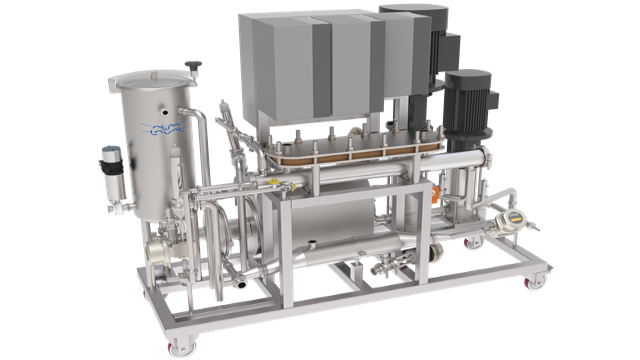
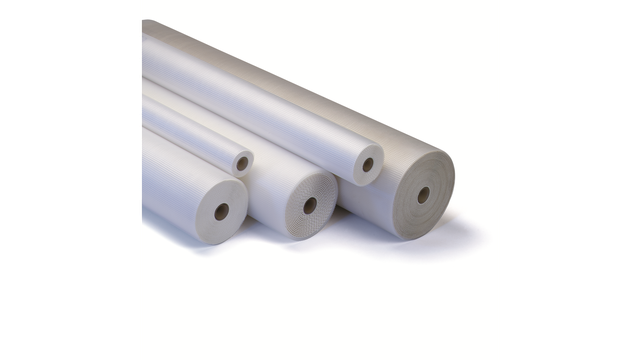
Membranes spirales
Notre large gamme de membranes sanitaires à spirale pour l'osmose inverse, la nanofiltration, l'ultrafiltration et la microfiltration peuvent récupérer, purifier, fractionner ou concentrer efficacement des produits dans les industries agro-alimentaire, laitière, pharmaceutique, les boissons, les biotechnologies, ainsi que la récupération de l'eau. Différentes configurations assurent la compatibilité avec tous les processus de filtration par membrane à flux croisé.
Filtration membranaire dans des conditions d'écoulement optimales pour une séparation efficace, un flux supérieur et une longue durée de vie
- Faible investissement initial et faibles coûts de remplacement grâce à une conception durable
- Rentable – faible consommation d'énergie (par rapport à une membrane céramique) et conception compacte nécessitant un espace au sol minimal.
- Efficaces – pas besoin de remplacer/d'éliminer les cartouches ou les consommables utilisés dans la filtration frontale traditionnelle.
- Excellentes stabilités chimique et thermique avec une résistance élevée à différents pH et à des températures élevées
- Passez à la vitesse supérieure simplement avec les membranes planes ou à spirale pour les applications à grande échelle
Our spiral wound membrane materials are compliant with all major regulations
Our spiral wound membrane materials are compliant with all major regulations
All membrane materials used for both flat sheet and spiral wound membrane configurations meet EU Regulation (EC) 1935/2004, EU Regulation 10/2011, EU Regulation (EC) 2023/2006 and FDA regulations (CFR) Title 21, and are suitable for use in food and pharmaceutical processing applications. Compliance also extends to the related equipment and fittings, including items such as plate-and-frame units, element housings and pumps, supporting safe and efficient spiral membrane filtration in a wide range of industries.

How do spiral membranes work?
The basic technology behind membrane filtration involves using a semi-permeable membrane to separate a liquid into two distinct streams.
Pumping this liquid across the surface of the membrane creates a positive trans-membrane pressure that allows any components smaller than the porosity of the membrane to pass through, forming the permeate.
Any components larger than the pore size simply cannot pass through, and remain behind in what is called the retentate. The surface of the spiral wound membrane is kept free of blockages by the force of the liquid flow moving parallel to the membrane surface.
Efficient spiral membrane filtration
Efficient spiral membrane filtration
A spiral membrane comprises of several membrane 'envelopes' with two membrane sheets separated by a permeate spacer mesh, each glued to a central permeate collection tube.
Between each pair of envelopes there is a spacer which creates the feed channel, allowing the feed to flow across the length of the spiral wound membrane, whilst the permeate passing through the membrane into the membrane envelope flows in a spiral pattern to the permeate collection tube.
Red = Feed/retentate.
Green = Permeate.